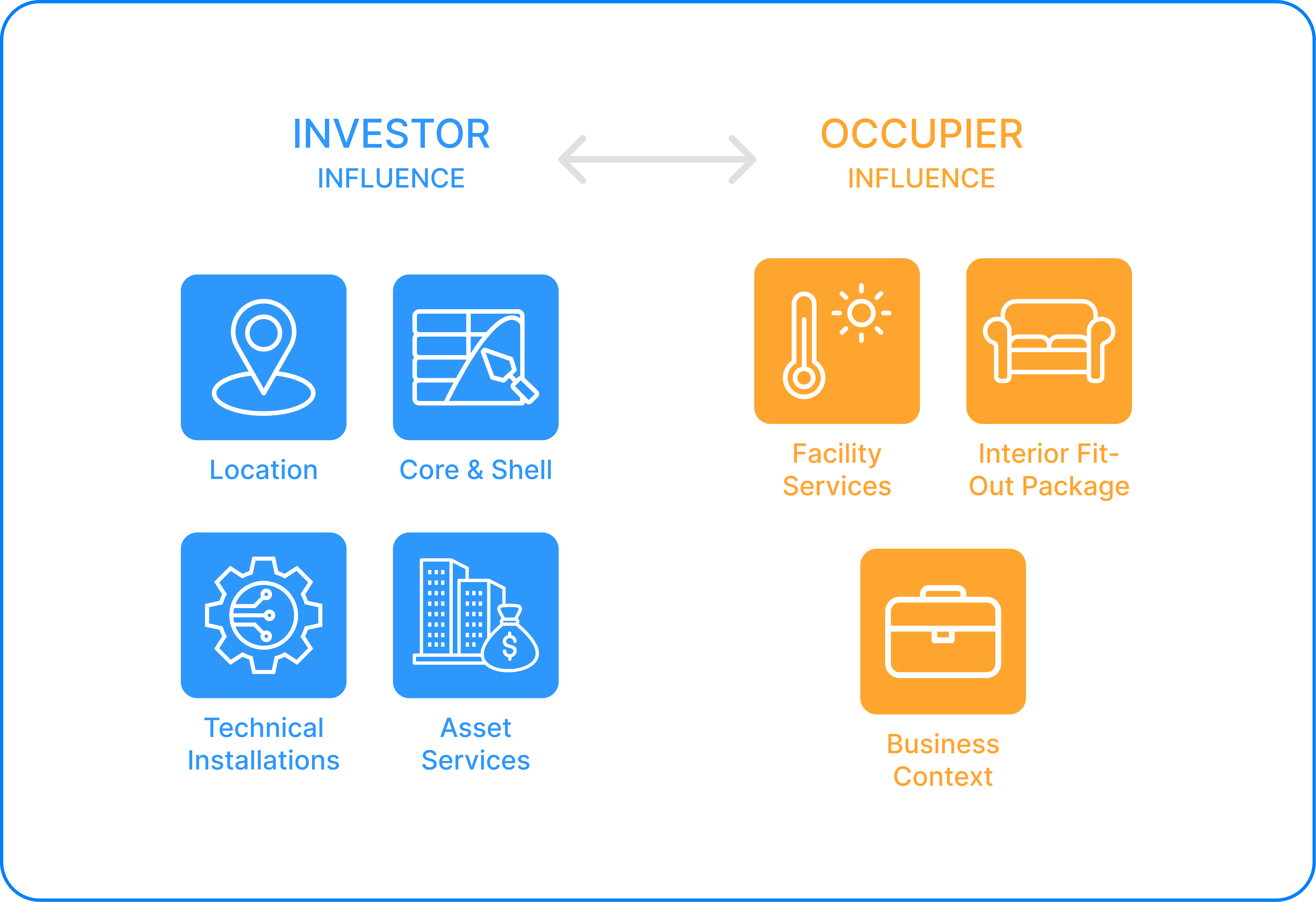
In the real estate sector, the investor-occupier dynamic is often considered common knowledge, and long standing. The industry, and the real estate advisory firms within it, structure their disciplines around an investor/owner/landlord versus occupier/tenant dynamic. These organisations have historically been structured around this distinct split and their disciplines divided around this premise. The dynamics and structure are considered to be common knowledge throughout the market, leading to assumptions that the broader market is similarly well-informed.
However, the very large number of small and medium-sized enterprises across the European Union, who presumably aren't aware of the real estate market dynamics, are uninformed. The larger medium-size and major enterprises have their real estate knowledge safeguarded within FM or corporate real estate departments and may or may not be supported by external consulting parties.
As of now there is no comprehensive guide or framework that serves as a universal reference point, describing the inherent dynamics that exist. Whilst each side has a clear understanding of their own context, there is limited publication from academic or professional institutions which examines the changing relationships between both perspectives, to provide a working foundation or framework.
This whitepaper attempts to unravel the intricacies of the investor-occupier relationship, shedding light on a paradigm shift accelerated by the COVID-19 pandemic. It argues for a collaborative understanding across all stakeholders, debunking the assumption that these dynamics are common knowledge, and advocates for a holistic, transparent market approach.
Overlaid on this is a dramatic shift in how occupiers relate to real estate, with shorter leases, the growth of co-working and memberships, and the movement from the occupier as a tenant to being firmly seen as a customer.
This paper aims to contribute to this discussion by establishing a structured framework, akin to a foundational guide, fostering a more comprehensive understanding of the intricate dynamics between investors and occupiers.