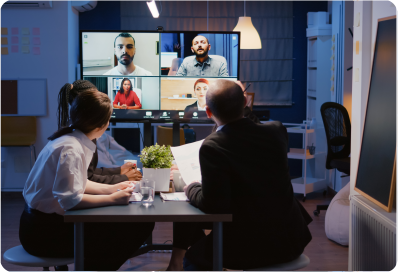
Leaders are facing a challenging landscape as employee expectations and organizational needs continue to shift in the workplace. The flexible work revolution signifies a significant psychological and cultural change, moving away from traditional work models. By applying insights from Mihaly Csikszentmihalyi's flow theory and self-determination theory, we can understand the importance of employee autonomy and psychological engagement in this transformative period.
The pandemic fundamentally disrupted our understanding of productivity, revealing that work is less about physical presence and more about meaningful contribution. According to Gallup1, only 15% of employees are actively engaged at work, a startling statistic that demands innovative approaches to workplace design.
The psychology of workplace transformation
Modern employees are seeking more than just a paycheck; they're craving:
- Authentic connection
- Meaningful work experiences
- Genuine organizational trust
- A commitment to physical and mental wellness
- Psychological safety
- A genuine commitment to ESG, including the occupation of sustainable buildings
Interestingly, the challenges of flexible work extend beyond logistical considerations. The real complexity lies, according to Ana Toroman2, in rebuilding workplace culture in a distributed environment where traditional bonding mechanisms have been disrupted.
Onboarding in a flexible world
The traditional onboarding model breaks down in remote settings. New employees need more than documentation, they require:
- Intentional connection strategies
- Clear communication channels
- Transparent performance expectations
- Technology that facilitates collaboration
Critically, invasive employee-monitoring tools are counterproductive. They erode trust and contradict the very autonomy that makes flexible work compelling. Instead, organizations must focus on outcome-based performance metrics and create environments that naturally motivate employees. The future isn't about controlling work, it's about empowering human potential.
The evolution of workplace flexibility: a psychological perspective
The conventional workplace structure is rapidly evolving, propelled by profound psychological requirements that extend beyond simple convenience. As we explore the psychological aspects of workplace flexibility, we discover a captivating interplay between human motivation, autonomy, and productivity.
The autonomy imperative
Drawing from self-determination theory3, we understand that employees fundamentally crave three core psychological needs:
- Autonomy — the ability to make meaningful choices
- Competence — feeling capable and effective
- Relatedness — genuine connection with colleagues
Flexible work isn't just a logistical solution, it's a profound psychological intervention. When employees experience greater control over their work environment, intrinsic motivation rises.
“Control leads to compliance; autonomy leads to engagement.” - Daniel Pink
The flow state frontier
Mihaly Csikszentmihalyi's flow theory4 provides critical insights into workplace productivity. Flow, that state of complete absorption and peak performance, is more likely to emerge when individuals can design their work environment to match their cognitive rhythms. Consider the traditional office: rigid schedules, constant interruptions, and one-size-fits-all environments. Now contrast this with flexible work, where employees can:
- Choose peak productivity hours
- Create personalized workspaces
- Minimize disruptive interactions
- Align work with natural energy cycles
The psychological challenges of returning
Why are employees resistant to returning to traditional offices? The answer lies in the profound psychological shift experienced during remote work. Many have discovered:
- Greater work-life integration
- Reduced commute-related stress
- Enhanced personal productivity
- Increased sense of personal agency
The resistance isn't about laziness, it's about having tasted a more human-centric approach. Organizations that fail to recognize this risk losing top talent who now prioritize psychological well-being over traditional workplace structures.
Building belonging in a distributed world
The critical challenge is recreating organizational belonging in a flexible environment. Employees need:
- Virtual collaboration tools that feel intuitive
- Regular, meaningful interactions
- Clear communication of organizational values
- Opportunities for spontaneous connection
Technology must serve human connection, not replace it. The most successful organizations will be those that view flexible work not as a compromise, but as an opportunity to reimagine workplace psychology.
Challenges of the post-pandemic work transition
The post-pandemic workplace transition represents a psychological minefield that goes far beyond logistical rearrangements. Leaders are now confronting a fundamental reimagination of work itself, a challenge that demands nuanced understanding and strategic empathy.
The psychological resistance phenomenon
Employees aren't simply hesitant about returning to offices; they're experiencing a profound cognitive dissonance. The pandemic fundamentally rewrote their expectations about work, autonomy, and personal productivity. Consider these critical psychological barriers:
- Loss of perceived control and flexibility
- Increased anxiety about social interactions
- Disrupted personal productivity rhythms
- Reduced sense of psychological safety
Onboarding's new complexity
Traditional onboarding models have become obsolete. In a flexible work environment, new employees need more than orientation, they require comprehensive psychological integration. The challenges include:
- Creating genuine connection in digital spaces
- Establishing trust without physical proximity
- Communicating organizational culture virtually
- Supporting individual learning preferences
Interestingly, organizational culture now depends more on intentional human skills than physical proximity5. The tools for belonging have transformed dramatically.
Technology: a double-edged sword
While digital tools promise connectivity, they often create unexpected psychological barriers. Invasive monitoring apps represent a fundamental misunderstanding of human motivation. Instead of fostering trust, they generate:
- Increased workplace stress
- Reduced intrinsic motivation
- Perception of micromanagement
- Potential talent exodus
The most progressive organizations recognize that performance emerges from psychological safety, not surveillance. They're investing in tools that facilitate genuine human connection and autonomous productivity.
Rebuilding organizational trust
The post-pandemic transition isn't just about location, it's about reconstructing the psychological contract between employers and employees. Success requires:
- Transparent communication
- Flexible policy design
- Individualized support mechanisms
- Continuous feedback loops
Leaders who approach this transition with empathy, understanding, and strategic flexibility will not just survive, they'll create workplaces that genuinely honour human potential.
Tools for fostering belonging in a flexible workplace
In the era of distributed work, fostering a sense of belonging isn't just a nice-to-have, it's a critical organizational imperative. The tools we choose can transform isolated remote experiences into vibrant, connected ecosystems that transcend physical boundaries.
Digital connection platforms
Modern belonging tools go far beyond traditional video conferencing. They're sophisticated psychological bridges that recreate water cooler moments and spontaneous interactions:
- Chat channels with non-work interaction zones
- Virtual coffee-chat randomizers
- Collaborative digital whiteboards
- Interactive team-building platforms
Psychological integration technologies
Cutting-edge platforms now focus on deeper emotional connections, not just task management:
- Mood-tracking integrations
- Peer-recognition systems
- Anonymous feedback mechanisms
- Personal growth and development trackers
Intentional onboarding experiences
Flexible work demands reimagined onboarding that creates immediate psychological safety:
- Personalized welcome packages
- Structured buddy systems
- Clear role-expectation workshops
- Cultural-immersion digital experiences
Trust-building communication frameworks
Successful flexible work environments prioritize transparent, empathetic communication:
- Regular, structured check-ins
- 360-degree feedback platforms
- Mental-health support resources
- Inclusive decision-making tools
Remember, technology should serve human connection, not replace it. The goal is creating an environment where every team member feels seen, valued, and authentically connected, regardless of physical location.
Reimagining onboarding in a flexible work environment
In the dynamic landscape of flexible work, onboarding has transformed from a standardized checklist to a deeply personalized psychological journey. Traditional orientation models crumble when employees are scattered across different time zones and work environments, demanding a radical reimagination of how we welcome and integrate new talent.
The new onboarding psychology
Modern onboarding isn't about paperwork, it's about creating immediate psychological connection. Drawing from the same Toroman piece (ibid), successful integration now requires a holistic approach that addresses emotional and professional needs simultaneously.
Designing intentional connection experiences
The challenges of onboarding in a flexible environment are multifaceted:
- Overcoming physical distance
- Creating authentic team connections
- Transmitting organizational culture virtually
- Supporting individual adaptation styles
Key strategies for meaningful virtual integration
Progressive organizations are implementing innovative approaches that go beyond traditional orientation:
- Personalized welcome journeys — craft individualized onboarding experiences that recognize each employee's unique background, learning style, and professional aspirations.
- Psychological safety frameworks — design intentional spaces where new team members can ask questions, express vulnerabilities, and feel genuinely supported.
- Cultural immersion programmes — create interactive digital experiences that help new employees understand organizational values, unwritten rules, and team dynamics.
Technology as a connection enabler
The right digital tools can transform isolation into meaningful engagement. However, the key is selecting platforms that prioritize human connection over mechanical tracking. Invasive monitoring apps are out; empathetic, context-rich collaboration tools are in.
- Interactive onboarding platforms
- Virtual buddy matching systems
- Multimedia cultural-orientation resources
- Adaptive learning-management systems
By reimagining onboarding as a holistic, psychologically informed process, organizations can turn the challenge of flexible work into a powerful opportunity for deeper, more meaningful professional relationships. The most successful onboarding strategies will recognize that every new team member brings unique potential. The goal isn't just to integrate them into existing systems, but to create an environment where they can authentically contribute and grow.
The ethical dimensions of workplace monitoring
In the intricate landscape of flexible work, workplace monitoring emerges as a critical ethical minefield that challenges traditional notions of trust, privacy, and employee autonomy. The temptation to implement invasive tracking technologies reveals more about organizational insecurity than genuine productivity concerns.
The trust paradox
Monitoring tools that promise increased productivity often achieve the exact opposite. When employees feel constantly surveilled, they experience:
- Increased psychological stress
- Reduced intrinsic motivation
- Diminished creativity
- Erosion of psychological safety
The psychological impact of surveillance
Research consistently demonstrates that invasive monitoring triggers a profound psychological response. Employees don't just resist tracking, they fundamentally disengage from environments that treat them as potential liabilities rather than valuable contributors.
Ethical alternatives to tracking
- Outcome-based performance metrics
- Regular collaborative check-ins
- Transparent goal-setting frameworks
- Trust-based performance evaluation
The most sophisticated leadership understands that true productivity isn't measured by keystrokes or hours logged, but by meaningful contributions and innovative thinking.
Cultural implications
- Talent retention challenges
- Reduced employee engagement
- Suppressed innovation
- Negative employer branding
By prioritizing human dignity over mechanical tracking, organizations can create environments where employees are naturally motivated to excel, not because they're being watched, but because they feel genuinely valued. Ultimately, ethical workplace monitoring isn't about preventing misconduct, it's about creating a culture of mutual respect, transparency, and shared organizational purpose.
Balancing flexibility and organizational culture
In the delicate dance of organizational culture and workplace flexibility, leaders face a nuanced challenge that goes far beyond simple policy adjustments. The real art lies in creating an environment that harmonizes individual autonomy with collective purpose, a psychological balancing act that requires deep understanding and intentional design.
The autonomy-culture paradox
Flexibility isn't about abandoning organizational culture; it's about reimagining how culture is created and sustained. Drawing from self-determination theory, we understand that true engagement emerges when employees experience:
- Genuine choice in work approaches
- Meaningful connection to organizational goals
- Opportunities for personal growth
- Authentic interpersonal relationships
Designing intentional connection strategies
- Virtual cultural rituals — create consistent touchpoints that transcend physical boundaries, such as weekly team shares, virtual celebrations, and collaborative digital experiences that reinforce shared values.
- Purpose-driven alignment — move beyond traditional communication methods to craft deep, meaningful connections that help employees see their individual contributions within the larger organizational narrative.
Psychological safety in distributed environments
Flexibility demands a radical reimagining of how we create psychological safety. Traditional office dynamics must be intentionally recreated through:
- Digital collaboration platforms
- Structured informal interaction opportunities
- Transparent communication channels
- Inclusive decision-making processes
The most successful organizations recognize that culture isn't about physical presence, but psychological connection. They create environments where employees feel genuinely seen, valued, and empowered, regardless of their physical location.
The flow state approach
Mihaly Csikszentmihalyi's flow theory offers profound insights into creating peak-performance environments. In flexible work settings, this means:
- Allowing individual productivity rhythms
- Minimizing unnecessary interruptions
- Providing autonomy in work execution
- Creating clear, meaningful goals
The future of organizational culture isn't about controlling where and how work happens, but about creating environments that naturally inspire human potential. Leaders who master this balance will not just survive the flexible work revolution, they'll lead it, creating workplaces that are both psychologically compelling and professionally exceptional.
Workplaced provides the tools and insights to help businesses navigate these issues and support the alignment of the organization and the employee within cultural contexts and hybrid working policies. By integrating human-centric data, Workplaced drives tailored solutions that meet the needs of both the organization and the individual employee.
Resources & Citations
- Gallup Workplace (updated January 2023) | The benefits of employee engagement
- PeopleKult (2022) | Essential human skills that impact workplace culture
- Ryan, R. M., & Deci, E. L. (2000). Self-determination theory and the facilitation of intrinsic motivation, social development, and well-being. American Psychologist, 55, 68-78
- Csikszentmihalyi, M. (1991). Flow: The Psychology of Optimal Experience. New York: Harper Collins
- PeopleKult (2022) | Essential human skills that impact workplace culture